Fitness recovery is just as important as training. After a challenging workout, your muscles need time and the right support to recover. The right fitness recovery gear can help you manage muscle soreness, improve mobility, relax tight muscles, and prepare your body for your next workout.
What Is Fitness Recovery Gear?
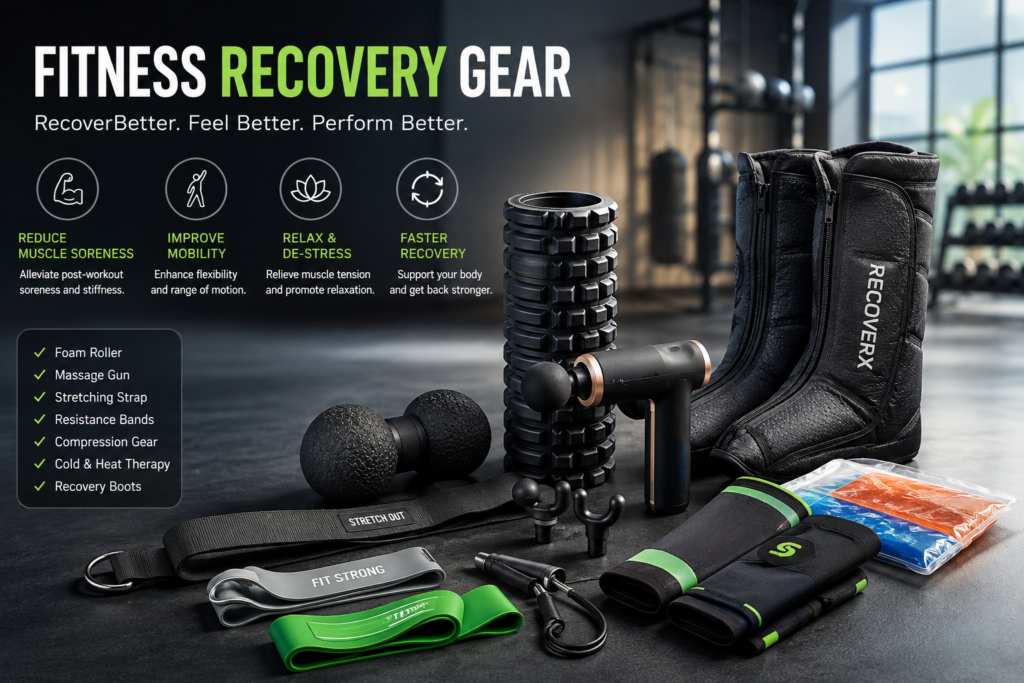
Fitness recovery gear includes tools and equipment designed to support the body after exercise. Common options include foam rollers, massage guns, stretching straps, compression gear, and recovery boots.
These tools do not replace sleep, proper nutrition, hydration, or rest. Instead, they can complement a well-rounded recovery routine.
Essential Fitness Recovery Gear
1. Foam Roller
A foam roller is one of the most affordable recovery tools. It can be used for self-massage and mobility exercises, particularly for areas such as the legs, back, and hips.
Choose a roller based on your comfort level. Beginners may prefer a softer, smooth roller, while experienced users may want a firmer or textured option.
2. Massage Gun
A massage gun uses rapid percussive movements to work on muscles. Many people use it before or after exercise to help their muscles feel less stiff.
Start with a low setting and avoid pressing aggressively on painful areas. Do not use a massage gun directly over bones, open wounds, or injured areas.
3. Stretching Strap
A stretching strap can help you perform controlled stretches and improve flexibility. It is especially useful for people who have difficulty reaching their feet or maintaining proper positioning during certain stretches.
4. Resistance Bands
Resistance bands are useful for both training and recovery. Light bands can support gentle mobility exercises, activation work, and stretching routines.
Because they are lightweight and portable, they are also convenient for home workouts and travel.
5. Compression Gear
Compression socks, sleeves, and clothing are commonly used by athletes during recovery. They provide gentle pressure around the body and can be useful after long periods of activity.
Choose comfortable compression gear that fits properly rather than selecting overly tight products.
6. Cold and Heat Recovery Tools
Cold packs can provide temporary relief from soreness, while heat can help relax stiff muscles. Both can be useful depending on your needs and the situation.
For recent injuries involving significant swelling or pain, it is better to seek professional medical advice rather than relying only on recovery equipment.
7. Recovery Boots
Compression recovery boots use sequential pressure around the legs. They are more advanced and generally more expensive than basic recovery tools.
They may appeal to runners, cyclists, and athletes who want a more comprehensive recovery setup, but they are not essential for everyone.
How to Choose the Right Fitness Recovery Gear
You do not need to buy every recovery product available. Start with your fitness routine, recovery needs, and budget.
For most people, a simple setup can include a foam roller, stretching strap, and resistance bands. If you regularly experience muscle tightness, a massage gun may be another useful option.
Consider these factors before buying:
- Your workout type: Runners, weightlifters, cyclists, and team-sport athletes may have different recovery needs.
- Ease of use: Choose equipment that you will actually use consistently.
- Quality: Look for durable materials and reliable construction.
- Comfort: Recovery should not cause unnecessary pain or discomfort.
- Budget: Start with basic tools before investing in expensive equipment.
How to Use Recovery Gear Effectively
Recovery gear works best when it is part of a broader recovery routine. After training, focus on hydration, nutritious food, adequate sleep, and appropriate rest.
Use recovery tools gently and consistently. Spending a few minutes with a foam roller or performing light mobility exercises may be more practical than using several tools at once.
Most importantly, listen to your body. Normal post-workout soreness is different from sharp, severe, or persistent pain.
Final Thoughts
The best fitness recovery gear is not necessarily the most expensive equipment. Simple tools such as foam rollers, stretching straps, resistance bands, and massage devices can complement good recovery habits.
Choose equipment that fits your activities and needs, learn how to use it correctly, and make recovery a regular part of your fitness routine. With the right approach, recovery can help you stay active, comfortable, and ready for your next workout.