You do not need a gym membership or expensive equipment to improve your fitness. With a little space, a consistent routine, and the right exercises, you can build strength, improve endurance, and stay active from the comfort of your home.
This Home Fitness Guide explains how to create a simple home workout routine, which exercises to choose, and how to stay motivated without going to the gym.
What Is Home Fitness?
Home fitness means exercising at home instead of using a commercial gym. Your workouts can include bodyweight exercises, resistance bands, dumbbells, cardio, stretching, and mobility exercises.
The biggest advantage is convenience. You can exercise at a time that fits your schedule without traveling to a gym.
Benefits of Working Out at Home
1. Save Time
You do not need to spend time traveling to and from a gym. A 20–30 minute workout can be enough to get active.
2. Save Money
Home workouts can reduce the cost of gym memberships and transportation. Many effective exercises require little or no equipment.
3. Exercise on Your Schedule
You can work out early in the morning, during a lunch break, or in the evening.
4. More Privacy
Some people feel more comfortable exercising at home, especially when they are new to fitness.
5. Easy to Stay Consistent
When your workout space is only a few steps away, it can be easier to develop a regular exercise habit.
Best Equipment for Home Workouts
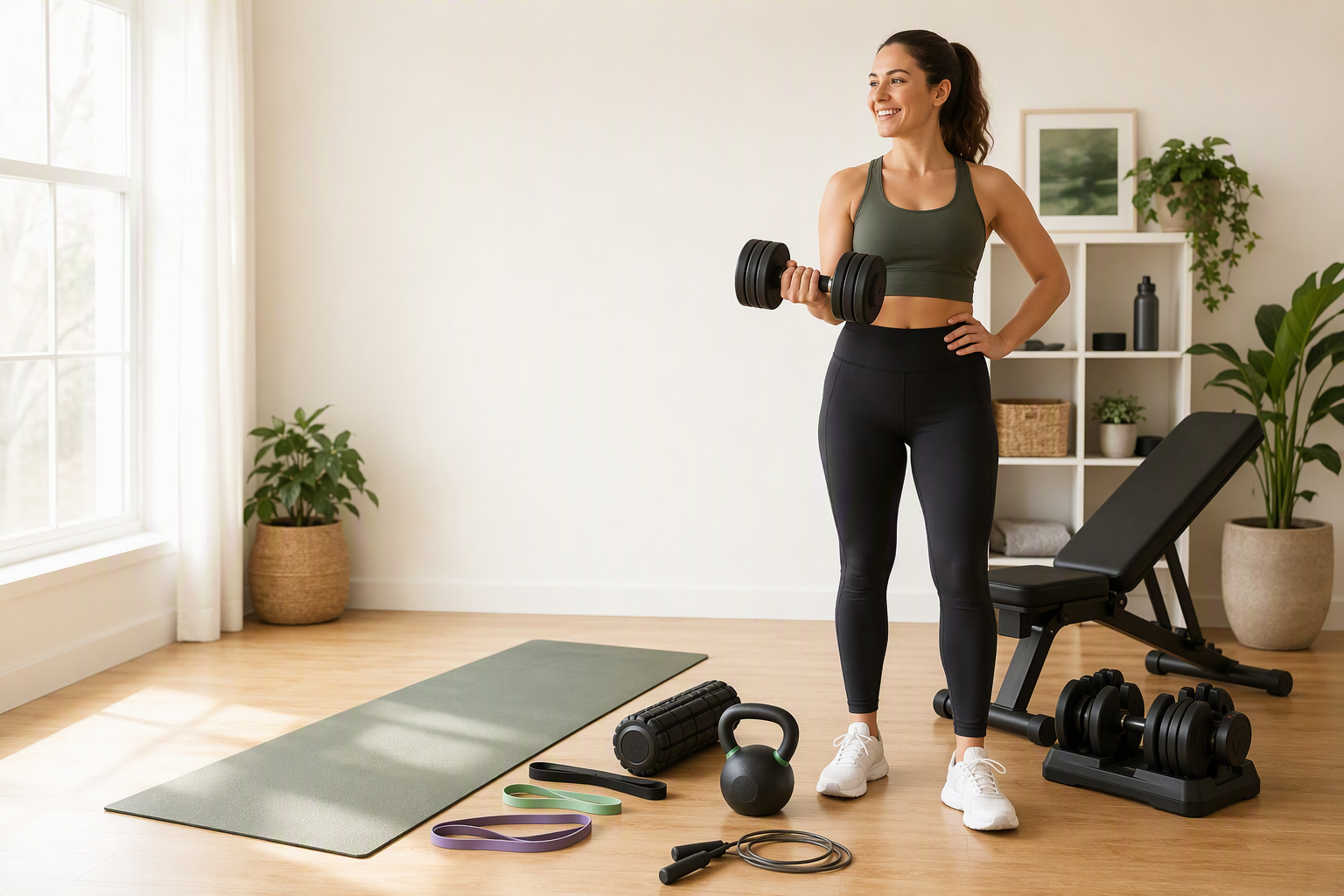
You can start with no equipment, but a few affordable items can add variety to your workouts.
Useful home fitness equipment includes:
- Exercise mat
- Resistance bands
- Dumbbells
- Jump rope
- Stability ball
- Adjustable bench
You do not need to buy everything at once. Start with the equipment that matches your goals and budget.
Best Bodyweight Exercises
Bodyweight exercises are a great starting point because they use your own body as resistance.
Squats
Squats target the legs and glutes. Keep your chest up and lower your body in a controlled manner.
Push-Ups
Push-ups work the chest, shoulders, arms, and core. If standard push-ups are difficult, start with an easier variation such as incline push-ups.
Lunges
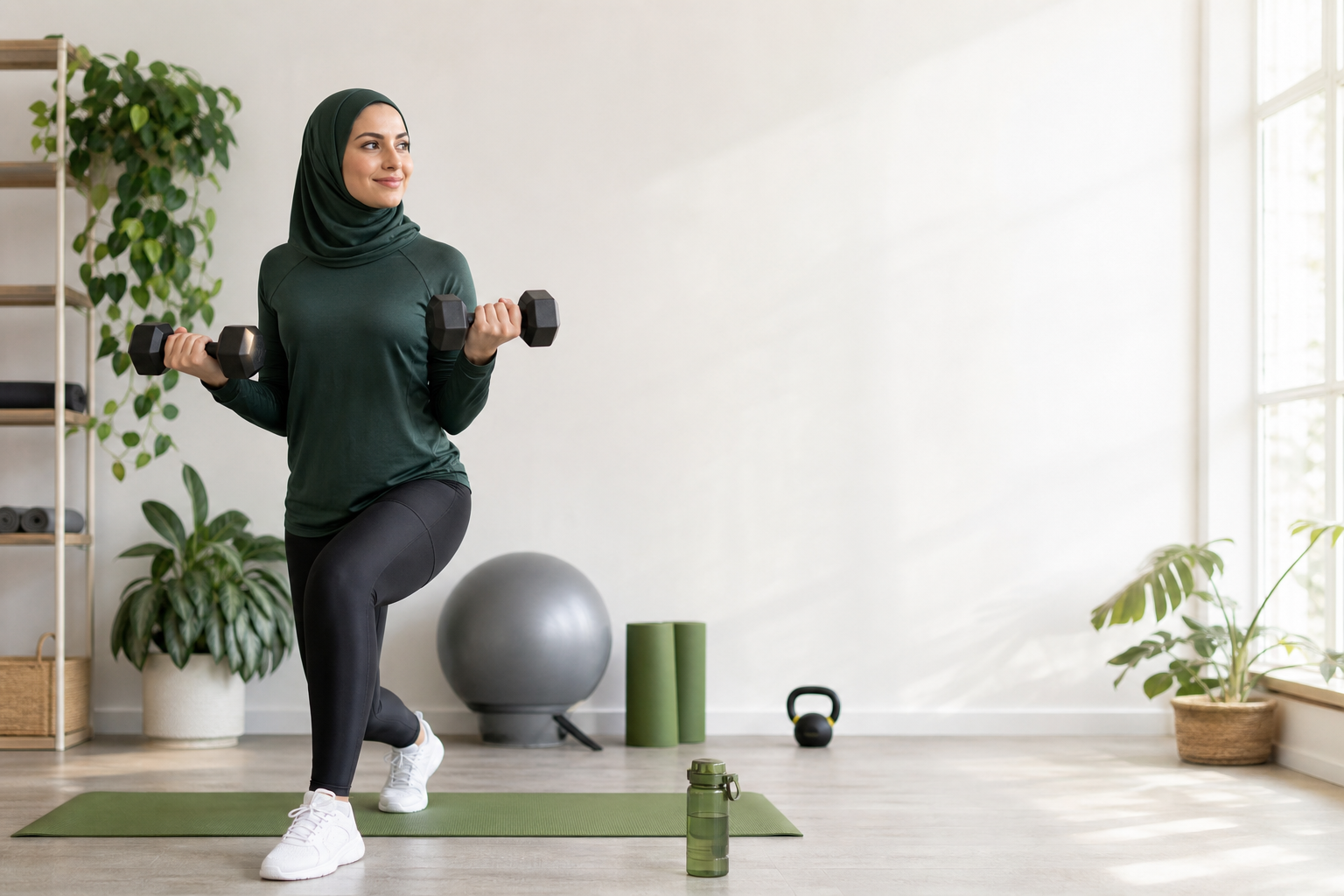
Lunges strengthen the legs and glutes while also challenging balance.
Glute Bridges
Glute bridges target the glutes and help strengthen the muscles around your hips.
Planks
Planks strengthen the core and improve stability. Keep your body in a straight line while holding the position.
Mountain Climbers
Mountain climbers combine core work with cardiovascular movement and can increase your heart rate.
Simple Home Workout Routine
If you are a beginner, try this full-body workout:
| Exercise | Sets | Repetitions |
|---|---|---|
| Bodyweight Squats | 3 | 10–15 |
| Push-Ups | 3 | 6–12 |
| Reverse Lunges | 2 | 8–12 each leg |
| Glute Bridges | 3 | 12–15 |
| Mountain Climbers | 2 | 20–30 seconds |
| Plank | 2–3 | 20–45 seconds |
Rest between exercises when needed. Focus on controlled movements rather than rushing through the workout.
How Often Should You Work Out at Home?
For beginners, 3–4 workout sessions per week can be a practical starting point.
For example:
- Monday: Full-body workout
- Tuesday: Walking or light activity
- Wednesday: Full-body workout
- Thursday: Rest
- Friday: Full-body workout
- Saturday: Light cardio or stretching
- Sunday: Rest
Your schedule can be adjusted based on your fitness level and lifestyle.
Add Cardio to Your Home Fitness Routine
Cardio can improve heart and lung fitness and help you stay active.
Good home cardio options include:
- Jumping jacks
- Jump rope
- Dancing
- Jogging in place
- Step-ups
- Mountain climbers
- Follow-along cardio workouts
Start at a comfortable intensity and gradually increase the duration as your fitness improves.
How to Build Strength at Home
You can make home workouts more challenging without buying heavy equipment.
Try:
- Increasing repetitions
- Adding resistance bands
- Using dumbbells
- Adding another set
- Slowing down the movement
- Using more challenging exercise variations
- Reducing rest periods when appropriate
This gradual increase in difficulty is known as progressive overload and can help you continue making progress.
Warm Up Before Exercise
A warm-up prepares your body for physical activity. Spend around 5–10 minutes doing light movements such as:
- Walking in place
- Arm circles
- Hip rotations
- Bodyweight squats
- Gentle dynamic stretches
The goal is to gradually increase your body temperature and prepare your muscles and joints for movement.
Cool Down After Your Workout
After exercising, gradually reduce your activity level. You can walk slowly for a few minutes and perform gentle stretches.
A cool-down can help you transition from exercise back to normal activity.
Nutrition for Home Fitness
Exercise works best when combined with a balanced diet.
Focus on:
- Protein-rich foods
- Fruits and vegetables
- Whole grains
- Healthy fats
- Adequate water
If your goal is to build muscle, make sure you consume enough protein and overall nutrition to support your training.
If your goal is weight loss, focus on sustainable eating habits rather than extreme diets.
How to Stay Motivated
Motivation can change from day to day. Instead of relying only on motivation, create simple habits.
Set Realistic Goals
Choose specific goals such as completing three workouts per week or increasing the number of push-ups you can perform.
Track Your Progress
Record your workouts, repetitions, weights, or workout duration. Seeing improvement can keep you motivated.
Create a Workout Space
You do not need a large room. A small, clean area where you can move comfortably is enough.
Follow a Routine
Try to exercise at approximately the same time each day. A regular schedule can make exercise feel like a normal part of your lifestyle.
Common Home Workout Mistakes
Avoid these common mistakes when exercising at home:
Skipping the Warm-Up
Starting intense exercise without preparing your body can make the workout feel harder.
Using Poor Technique
Focus on proper form before increasing repetitions or resistance.
Doing Too Much Too Soon
Beginners should gradually increase workout intensity. Training too hard can lead to excessive soreness and make it difficult to stay consistent.
Doing the Same Workout Every Day
Your body needs recovery. Give heavily trained muscles enough time to rest.
Not Tracking Progress
Without tracking your workouts, it can be difficult to know whether you are improving.
Safety Tips for Home Workouts
Make sure you have enough space to move safely. Keep floors clear of objects that could cause you to trip.
If you use equipment, check that it is stable and in good condition. Stop exercising if you experience unusual or severe pain, dizziness, or difficulty breathing.
If you have an injury or medical condition, consider speaking with a qualified healthcare professional before starting a new exercise program.
Final Thoughts
This Home Fitness Guide shows that you do not need a gym to become fitter and stronger. Bodyweight exercises, simple equipment, regular movement, and a balanced diet can provide an effective foundation for your fitness journey.
Start with short, manageable workouts and gradually increase the challenge. The most important part is consistency. Even a simple home workout routine can produce meaningful results when you follow it regularly.