A good workout routine is about more than exercise alone. The right workout and recovery accessories can make training more comfortable, support better movement, and help you build a consistent fitness routine.
From resistance bands and exercise mats to foam rollers and massage tools, there are many products available today. However, you do not need to buy everything. The best approach is to choose accessories that match your workout style, fitness goals, available space, and budget.
What Are Workout & Recovery Accessories?
Workout and recovery accessories are tools designed to support exercise, mobility, stretching, muscle relaxation, hydration, and post-workout recovery.
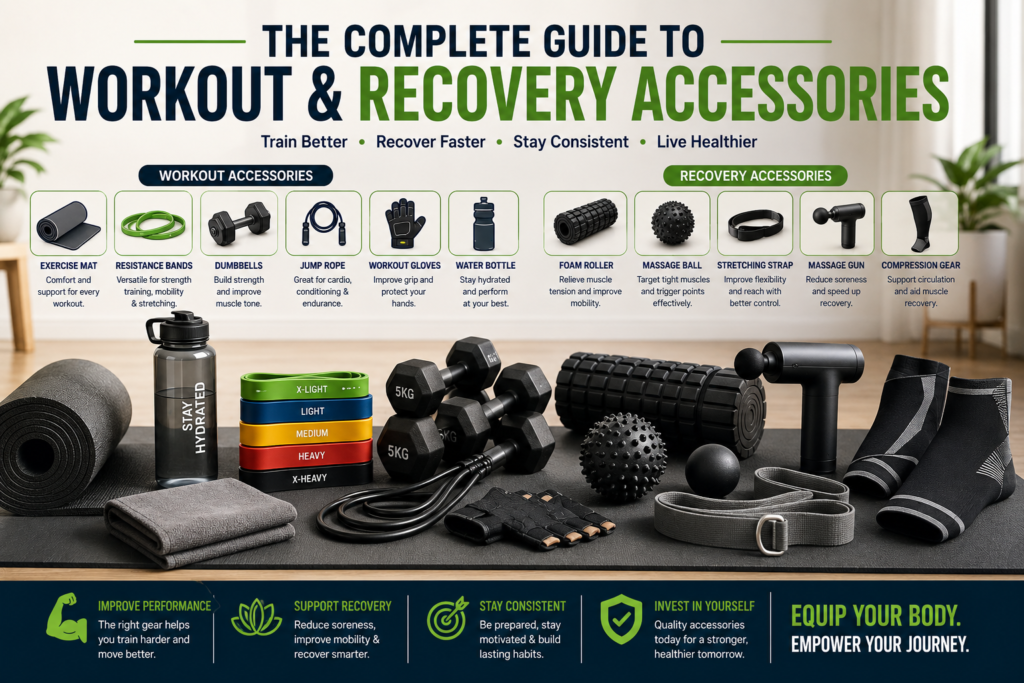
Common examples include:
- Exercise mats
- Resistance bands
- Dumbbells
- Jump ropes
- Workout gloves
- Water bottles
- Foam rollers
- Massage balls
- Stretching straps
- Massage guns
- Compression gear
Some accessories are designed primarily for training, while others are focused on recovery. Many can support both.
Essential Workout Accessories
1. Exercise Mat
An exercise mat is a useful foundation for home workouts.
It provides cushioning and grip during exercises such as planks, push-ups, sit-ups, stretching, yoga, and mobility exercises.
When choosing a mat, consider its thickness, grip, durability, and how easy it is to clean.
A lightweight mat can be especially useful if you regularly move between different workout locations.
2. Resistance Bands
Resistance bands are among the most versatile fitness accessories.
They can be used for strength exercises, warm-ups, activation exercises, mobility work, and stretching.
Different resistance levels allow you to adjust the difficulty of your exercises as your fitness level changes.
Because they are compact and lightweight, resistance bands are also excellent for travel and small home workout spaces.
3. Dumbbells
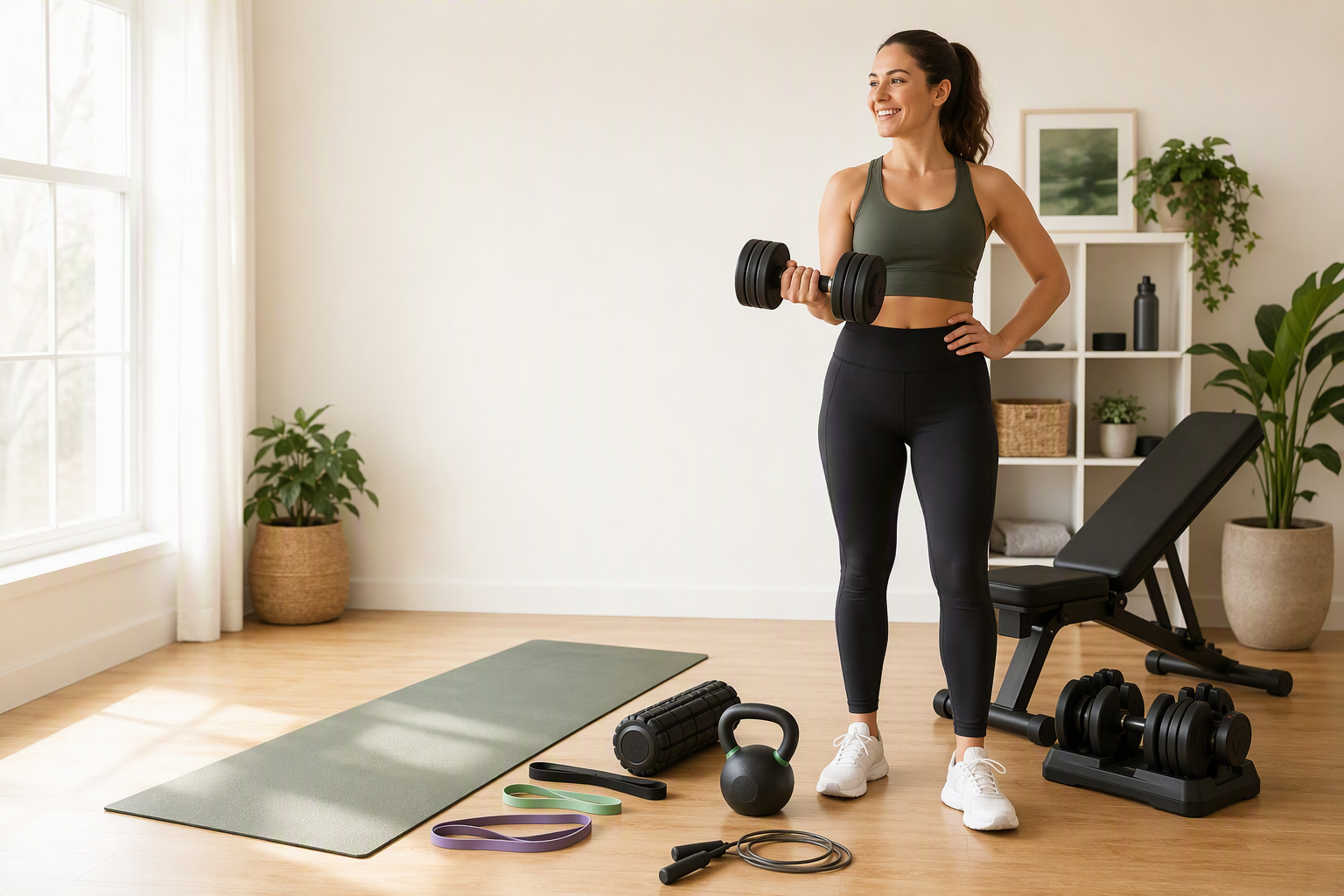
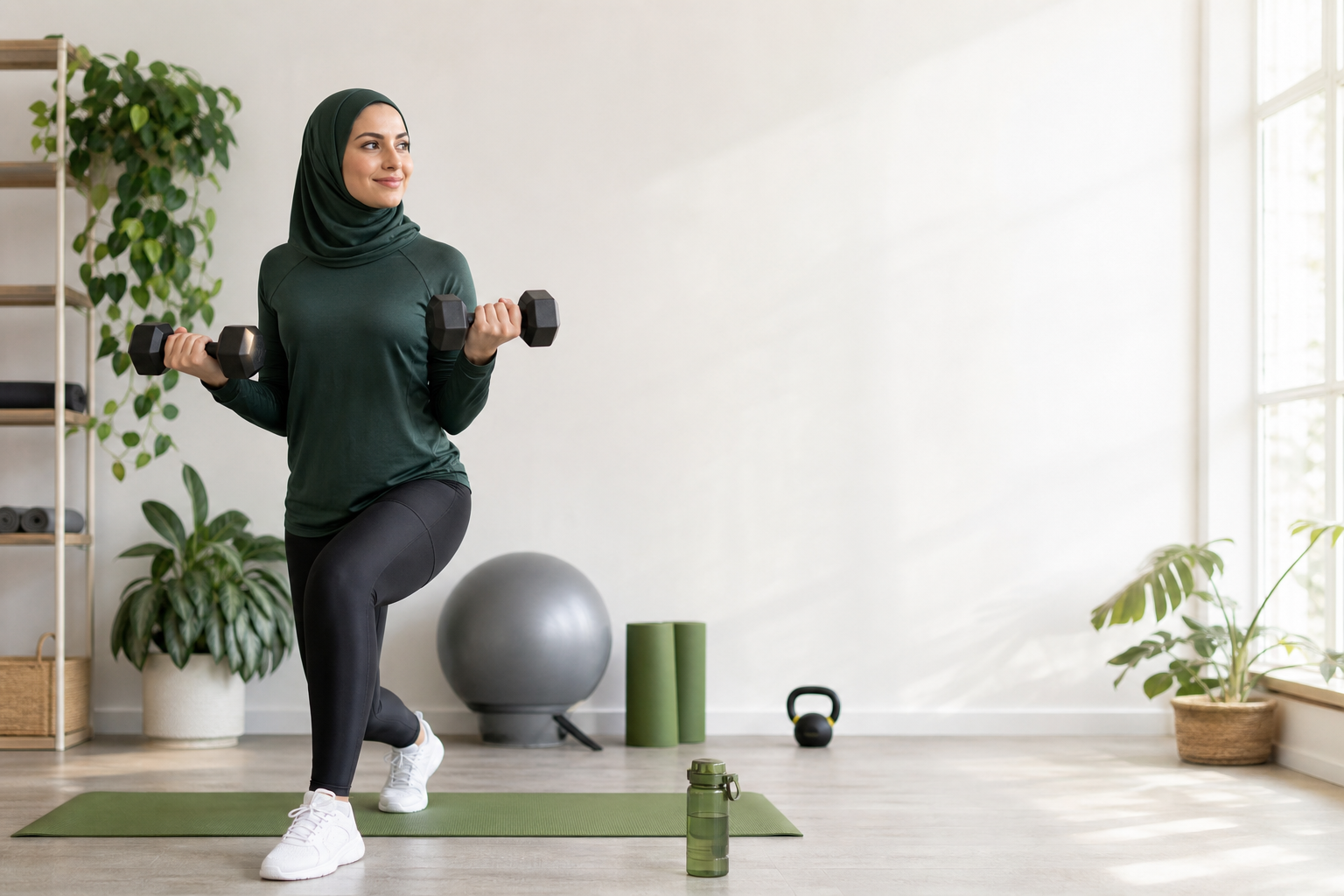
Dumbbells allow you to add resistance to many exercises.
They can be used for movements such as squats, lunges, rows, shoulder presses, curls, and chest exercises.
Beginners should choose weights that allow controlled movement and good technique rather than immediately selecting the heaviest option.
Adjustable dumbbells can be a practical choice if you have limited space.
4. Jump Rope
A jump rope is a simple accessory for cardiovascular training.
It can be used for warm-ups, conditioning workouts, interval training, or short cardio sessions.
Beginners should focus on rhythm and controlled movement before increasing workout duration or speed.
Make sure you have enough space and an appropriate surface before jumping.
5. Workout Gloves
Workout gloves can provide additional grip and may improve comfort during certain strength exercises.
They can be particularly useful for people who frequently use dumbbells, barbells, or other equipment that places pressure on the hands.
Choose gloves that fit comfortably without restricting hand movement.
6. Water Bottle
Hydration is an important part of an active lifestyle.
Keeping a reusable water bottle nearby makes it easier to drink regularly during and after exercise.
Look for a bottle that is easy to clean, comfortable to carry, and large enough for your typical workout.
Essential Recovery Accessories
7. Foam Roller
A foam roller is one of the most popular recovery accessories.
It can be used for self-massage and mobility exercises involving areas such as the legs, hips, and upper back.
Some people use foam rolling before exercise as part of a movement routine, while others use it afterward when muscles feel tight.
Beginners may prefer a smoother and softer roller before moving to firmer or textured options.
8. Massage Ball
A massage ball allows you to target smaller areas more precisely than a foam roller.
It can be useful for areas such as the feet, shoulders, upper back, and hips.
Apply gentle, controlled pressure and avoid pressing directly on bones, joints, or injured areas.
9. Stretching Strap
A stretching strap can make certain stretches easier to perform and control.
It is particularly useful when limited flexibility makes it difficult to reach your feet or maintain a proper position.
You can use a stretching strap for the hamstrings, shoulders, calves, hips, and other areas.
10. Massage Gun
Massage guns use rapid percussive movements to work on muscles.
Some people use them before or after exercise as part of their mobility and recovery routine.
If you use a massage gun, begin with a low setting and avoid applying it directly over bones, joints, open wounds, or injured areas.
More pressure is not necessarily better.
11. Compression Gear
Compression socks, sleeves, and other compression garments are commonly used by athletes and active individuals.
They provide gentle pressure around the body and may be comfortable during or after prolonged activity.
Choose a size that fits correctly. Compression gear should feel supportive rather than painfully tight.
How to Combine Workout and Recovery Accessories
You do not need to use every accessory during every workout.
A simple routine could look like this:
Before training:
- Light mobility exercises
- Resistance-band activation
- Dynamic movements
- Short warm-up
During training:
- Exercise mat
- Dumbbells or resistance bands
- Water bottle
- Workout timer
After training:
- Gentle stretching
- Foam rolling
- Mobility exercises
- Hydration
- Appropriate rest
This approach keeps your routine simple while allowing different accessories to serve specific purposes.
How to Choose the Right Accessories
Before purchasing fitness accessories, consider the following factors.
Your Workout Type
Your equipment should match your activities.
A runner may prioritize a jump rope, mobility tools, and recovery accessories, while someone focused on strength training may benefit more from dumbbells and resistance bands.
Your Fitness Goals
Think about what you are trying to accomplish.
If your goal is strength, prioritize resistance equipment. If flexibility and mobility are your main goals, stretching and mobility tools may be more useful.
Your Available Space
People with limited space should focus on compact and versatile products.
Resistance bands, a jump rope, stretching strap, and adjustable equipment can provide many exercise options without taking up much room.
Your Budget
You do not need to purchase everything at once.
Start with affordable essentials and gradually add equipment when you understand what you actually use.
Product Quality
Look for durable materials, comfortable designs, and reliable construction.
A slightly more expensive product that lasts longer may provide better value than repeatedly replacing low-quality equipment.
A Simple Workout & Recovery Setup
If you are building your fitness equipment collection from scratch, you can start with a small selection.
Beginner Setup
- Exercise mat
- Resistance bands
- Pair of dumbbells
- Water bottle
- Jump rope
- Foam roller
- Stretching strap
This setup can support strength training, cardio, mobility, stretching, and basic recovery.
As your fitness routine develops, you can add more specialized accessories such as massage balls, massage guns, adjustable weights, or compression gear.
Common Mistakes to Avoid
Buying Equipment You Don’t Use
A large collection of fitness products does not guarantee better results. Choose accessories that fit your actual routine.
Focusing on Equipment Instead of Consistency
The most advanced equipment cannot replace regular exercise.
Consistency is more important than having the latest fitness products.
Using Recovery Tools Too Aggressively
Recovery should not be unnecessarily painful. Avoid excessive pressure when using foam rollers, massage balls, or massage guns.
Ignoring Basic Recovery
Accessories are only one part of recovery.
Adequate sleep, hydration, nutritious food, rest, and sensible training are fundamental to a balanced fitness routine.
Choosing the Wrong Equipment
Buying equipment because it looks popular online does not mean it is right for you.
Consider your goals, experience, workout style, and available space before purchasing.
How to Build Your Collection Over Time
You do not need to create a complete home gym immediately.
Start with versatile basics such as a mat, resistance bands, and a water bottle. Add dumbbells if you want more strength-training options.
Once you exercise consistently, identify areas where you need additional support. You might then add a foam roller for mobility, a stretching strap for flexibility, or a massage ball for targeted muscle work.
This gradual approach can save money and help you avoid buying equipment that ends up unused.
Final Thoughts
The best workout and recovery accessories are not necessarily the most expensive or advanced products.
Simple equipment such as exercise mats, resistance bands, dumbbells, jump ropes, foam rollers, stretching straps, and water bottles can support a wide range of fitness activities.
Choose accessories based on your goals and lifestyle, use them correctly, and focus on consistency. Remember that equipment should complement the fundamentals of fitness—not replace regular exercise, good nutrition, hydration, sleep, and recovery.
Start with the essentials, build your collection gradually, and choose products that make your fitness routine easier and more enjoyable.