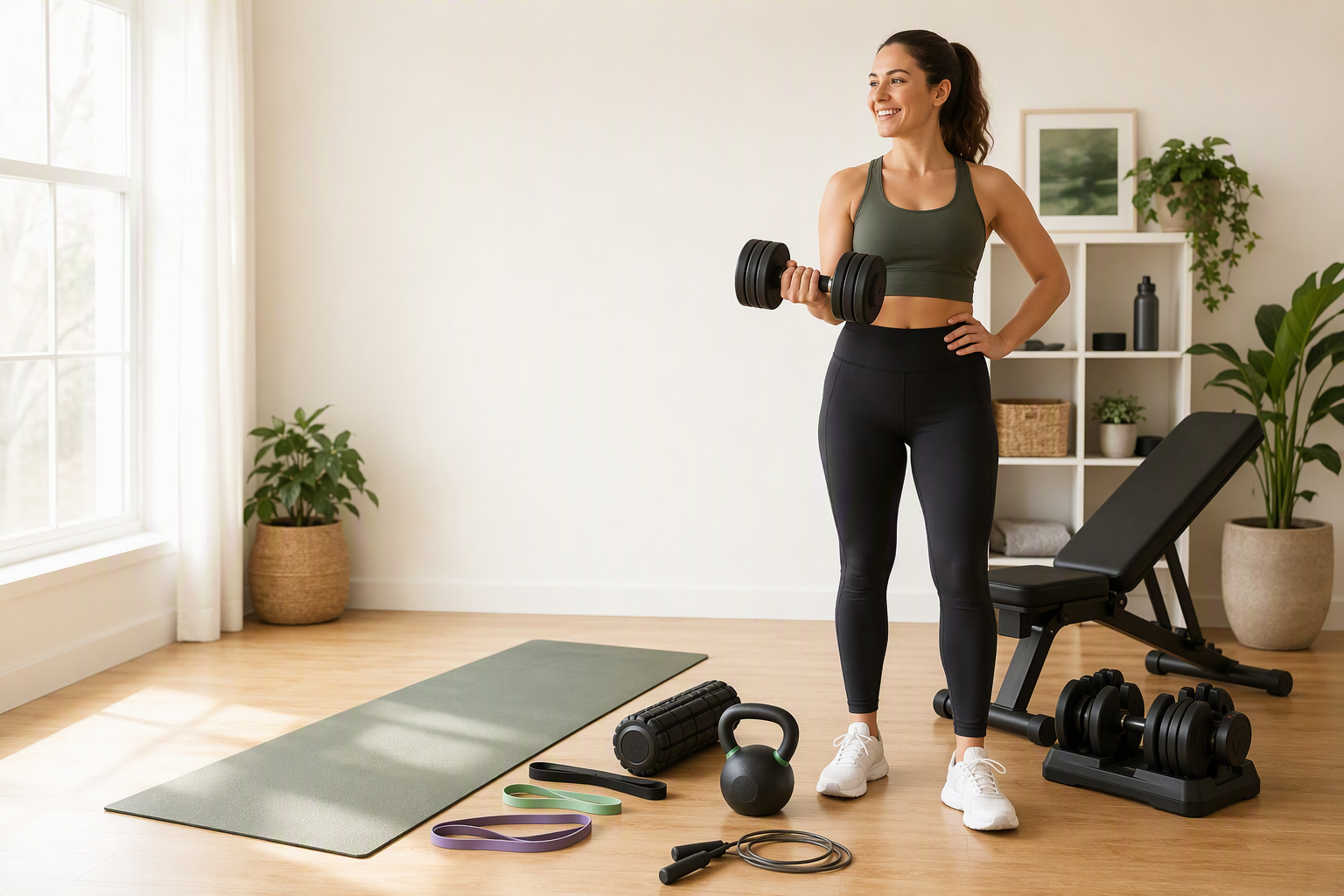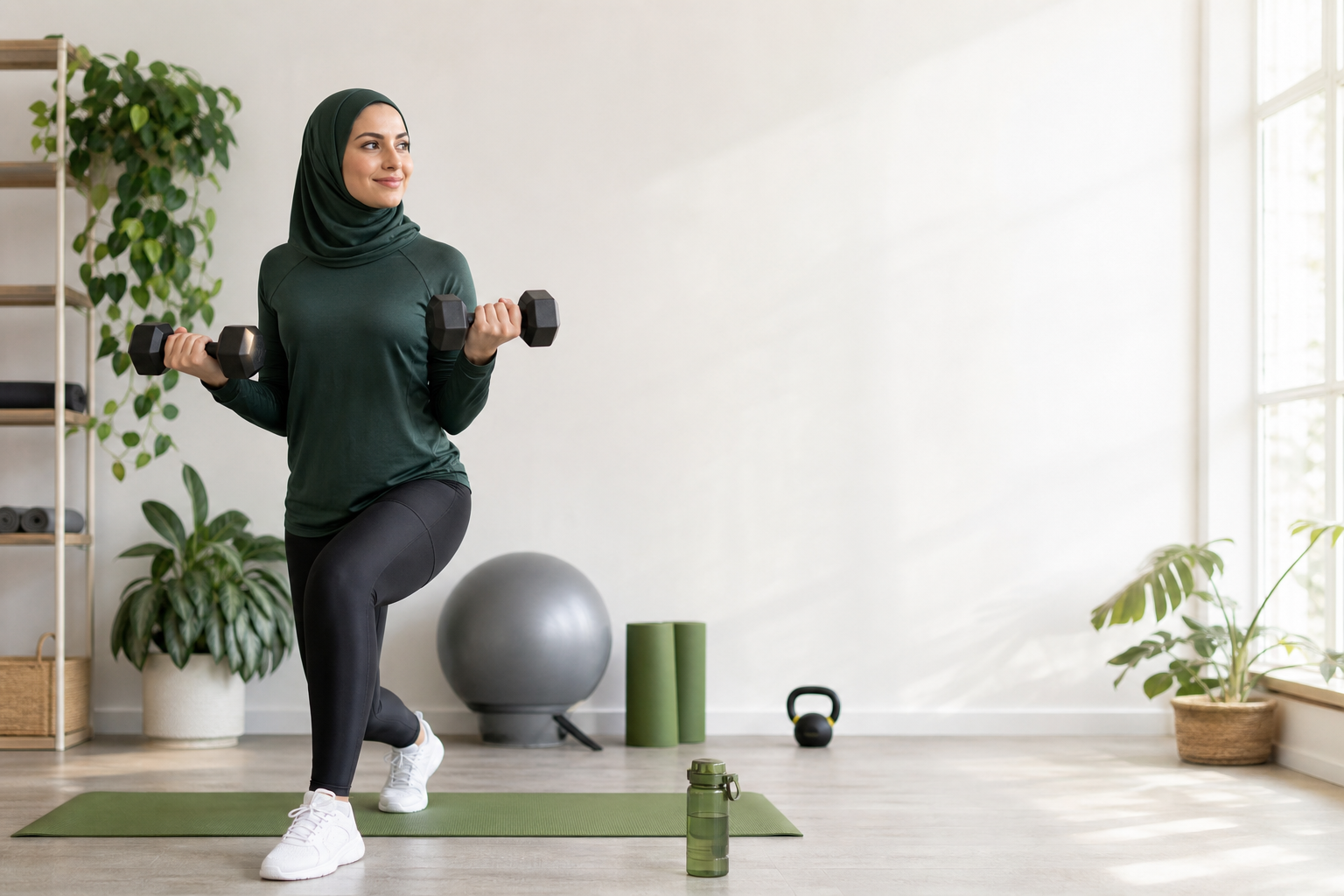
Starting a home gym does not have to be expensive or complicated. You do not need a room full of machines to begin building strength, improving your fitness and creating a consistent workout routine.
The best beginner gym equipment is practical, easy to use and versatile enough to support different types of workouts. With a few carefully chosen items, you can train your whole body from the comfort of home.
In this guide, we will cover the 10 best gym equipment options for beginners at home, what each one is useful for and what to consider before buying.
Affiliate Disclosure: Some links in this article may be affiliate links. If you purchase through one of these links, we may earn a commission at no additional cost to you. We only recommend products that may be useful for beginners building a home workout routine.
1. Adjustable Dumbbells
Adjustable dumbbells are one of the most useful investments for a beginner home gym. Instead of buying several pairs of fixed dumbbells, you can adjust the weight to suit different exercises and fitness levels.
What you can do with adjustable dumbbells
- Squats
- Shoulder presses
- Bicep curls
- Rows
- Lunges
- Chest presses
- Romanian deadlifts
They are especially helpful when you want to gradually increase the challenge of your workouts. As your strength improves, you can add more weight without needing to buy a completely new set.
What to look for
Choose adjustable dumbbells with secure weight plates, comfortable handles and a design that is easy to adjust. Check the maximum weight before purchasing so the set can continue to support your progress.
Best for: Full-body strength training and progressive workouts.
2. Resistance Bands
Resistance bands are affordable, lightweight and easy to store. They are an excellent choice for beginners who want to exercise at home, while traveling or in a small space.
Resistance bands are available in different levels of tension, so you can start with lighter resistance and gradually progress to stronger bands.
Popular resistance band exercises
- Glute bridges
- Squats
- Lateral walks
- Chest presses
- Seated rows
- Shoulder exercises
- Assisted stretching
Some band sets also include handles, ankle straps and a door anchor. These accessories can give you more exercise options.
Best for: Beginners, home workouts, mobility training and small spaces.
3. Exercise Mat or Yoga Mat
A comfortable exercise mat can make floor-based workouts safer and more enjoyable. It provides support for your knees, hands, back and joints during exercises.
You can use a mat for:
- Planks
- Sit-ups
- Stretching
- Yoga
- Mobility exercises
- Bodyweight strength training
When choosing a mat, look for a non-slip surface, enough cushioning and a size that gives you room to move. A mat that is easy to clean is also a practical choice.
Best for: Floor workouts, stretching, yoga and core training.
4. Kettlebell
A kettlebell is a compact piece of equipment that can be used for strength, cardio and full-body conditioning. It is useful for beginners because one kettlebell can support many different movements.
Beginner-friendly kettlebell exercises
- Goblet squats
- Kettlebell deadlifts
- Farmer carries
- Overhead presses
- Russian twists
- Kettlebell rows
Beginners should focus on learning proper form before attempting fast or advanced movements such as kettlebell swings. Start with a manageable weight that allows you to control every repetition.
Best for: Full-body conditioning, strength and functional movement.
5. Jump Rope
A jump rope is inexpensive, portable and effective for cardio. It can help you improve coordination, rhythm and cardiovascular fitness.
If continuous jumping feels difficult at first, begin with short intervals. For example, jump for 20 seconds, rest and repeat several times.
Jump rope tips for beginners
- Wear supportive workout shoes
- Use a surface that provides some cushioning
- Keep your jumps low
- Rotate the rope with your wrists
- Start slowly and focus on rhythm
A jump rope may not be suitable for everyone, especially people with certain joint problems or injuries. Choose a low-impact cardio option if jumping causes discomfort.
Best for: Cardio, coordination and quick home workouts.
6. Adjustable Weight Bench
An adjustable weight bench can make dumbbell workouts more comfortable and give you more exercise options. It can support seated and lying exercises while helping you maintain a stable position.
You can use a bench for:
- Dumbbell chest presses
- Seated shoulder presses
- Step-ups
- Supported rows
- Bulgarian split squats
- Triceps exercises
Look for a bench with a stable frame, secure adjustment positions and a weight capacity that suits your needs. Make sure the bench fits safely in your workout area.
Best for: Strength training and expanding your dumbbell exercise options.
7. Foam Roller
A foam roller is a useful recovery tool for beginners. It can be used as part of a warm-up, cool-down or mobility routine.
Many people use foam rollers to apply gentle pressure to muscles after exercise. This may help you feel less stiff and improve your overall recovery routine.
Common areas for foam rolling
- Upper back
- Glutes
- Hamstrings
- Calves
- Quadriceps
Use slow, controlled movements and avoid rolling directly over bones, joints or areas of sharp pain. A foam roller should not replace professional care if you have an injury.
Best for: Recovery, mobility and post-workout stretching routines.
8. Walking Pad or Treadmill
A walking pad or treadmill can be a convenient option if you want to walk indoors. It is especially helpful when the weather is poor, your neighborhood is not convenient for walking or you prefer exercising at home.
Walking is a beginner-friendly way to increase daily movement. You can begin with short sessions and gradually increase the duration or pace.
What to consider before buying
- Available floor space
- Maximum user weight
- Speed range
- Noise level
- Storage and folding design
- Safety features
- Warranty and customer support
If your goal is mainly walking, a compact walking pad may be enough. If you want to run, choose a model designed for running rather than walking only.
Best for: Low-impact cardio, daily steps and indoor walking.
9. Stability Ball
A stability ball can add variety to your core, mobility and balance exercises. It can also be used as a support tool for certain beginner movements.
Possible exercises include:
- Stability ball crunches
- Wall squats
- Hip bridges
- Hamstring curls
- Seated balance exercises
- Gentle stretching
Choose the correct ball size for your height and use it on a clear, non-slip surface. Beginners should start with controlled exercises before attempting movements that require advanced balance.
Best for: Core training, balance and mobility.
10. Pull-Up Bar or Doorway Trainer
A pull-up bar can help you train your back, shoulders, arms and core. Beginners may not be able to perform a full pull-up immediately, but the equipment can still be used for assisted exercises and hanging movements.
Before buying, carefully check how the bar attaches to the doorway and whether the design is suitable for your door frame. Follow the installation instructions and check that it is secure before exercising.
Beginner exercises
- Assisted hangs
- Knee raises
- Negative pull-ups
- Scapular pulls
- Resistance-band-assisted pull-ups
Best for: Upper-body strength, grip strength and progression toward pull-ups.
How to Choose the Right Equipment for Your Home Gym
You do not need to buy all 10 items at once. Start with equipment that supports your goals, available space and budget.
If you want a low-cost setup
Begin with:
- Resistance bands
- An exercise mat
- One pair of dumbbells
- A jump rope
If you want to focus on strength
Consider:
- Adjustable dumbbells
- A weight bench
- Resistance bands
- A kettlebell
If you want to improve cardio
Consider:
- A jump rope
- A walking pad
- An exercise mat
- Resistance bands for circuit workouts
If you want to improve recovery
Consider:
- A foam roller
- An exercise mat
- Resistance bands for mobility exercises
Beginner Home Gym Buying Checklist
Before you purchase any equipment, ask yourself:
- Does it support my main fitness goal?
- Do I have enough space to use and store it?
- Is it suitable for my current fitness level?
- Can I use it for several different exercises?
- Is it easy to clean and maintain?
- Does it have reliable safety features?
- Are the product reviews consistent and detailed?
- Is the return policy clear?
Avoid buying equipment only because it looks popular online. The best product is one you will actually use consistently.
A Simple Beginner Workout Using Basic Equipment
Here is a simple full-body routine using beginner-friendly equipment:
- Bodyweight squats: 10 repetitions
- Resistance-band rows: 10 repetitions
- Dumbbell shoulder presses: 8–10 repetitions
- Glute bridges on an exercise mat: 12 repetitions
- Kettlebell deadlifts: 10 repetitions
- Plank: 15–30 seconds
- Light stretching with a foam roller: 5 minutes
Complete one or two rounds, depending on your fitness level. Rest when needed and focus on controlled movement rather than speed.
Final Thoughts
Building a home gym does not require a large budget or a room filled with expensive machines. The right beginner equipment can help you build strength, improve fitness and stay consistent with your workouts.
Start with versatile items such as adjustable dumbbells, resistance bands and an exercise mat. As your goals and experience develop, you can add equipment such as a kettlebell, weight bench, walking pad or recovery tools.
The most important equipment is the equipment you will use regularly. Choose carefully, learn proper form and make steady progress.
Ready to Build Your Home Gym?
Start with the equipment that matches your fitness goal, space and budget. Browse our beginner-friendly gym equipment recommendations and choose the tools that can help you create a stronger, healthier routine at home.
Health and Safety Note
This article is for general educational purposes and does not replace advice from a qualified fitness professional or healthcare provider. Start at a comfortable level, use proper form and stop exercising if you experience sharp or unusual pain. If you have a medical condition or injury, consult a qualified healthcare professional before starting a new workout program.