Mobility and flexibility are important parts of a healthy and active lifestyle. Whether you exercise regularly, work at a desk, or simply want to move more comfortably, the right mobility and flexibility tools can support your daily movement routine.
These tools can help you perform stretches, improve your range of motion, prepare your body for exercise, and relax tight muscles. However, they work best alongside regular physical activity, proper rest, and good movement habits.
What Are Mobility & Flexibility Tools?
Mobility and flexibility tools are simple pieces of equipment designed to support stretching, movement, muscle relaxation, and joint mobility.
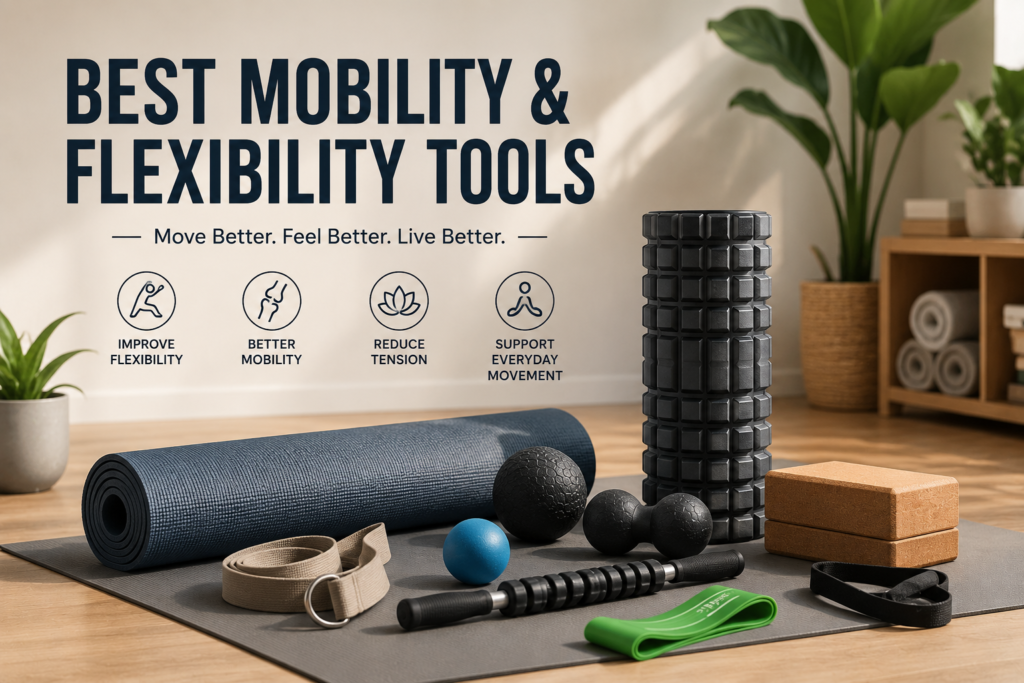
Popular options include foam rollers, stretching straps, resistance bands, massage balls, yoga blocks, and mobility sticks.
You do not need all of them. The best choice depends on your fitness level, activities, goals, and budget.
Essential Mobility & Flexibility Tools
1. Foam Roller
A foam roller is one of the most popular tools for mobility and muscle relaxation. It can be used on areas such as the thighs, calves, hips, and upper back.
Regular foam rolling may help you feel less stiff and prepare your muscles for movement.
Beginners may prefer a smooth and softer roller, while experienced users may choose firmer or textured designs.
2. Stretching Strap
A stretching strap can make many stretches easier to perform correctly. It is particularly useful when you cannot comfortably reach your feet or maintain the right position during a stretch.
You can use it for hamstrings, shoulders, hips, calves, and other areas.
A good stretching strap should be strong, comfortable to hold, and long enough for the exercises you plan to perform.
3. Resistance Bands
Resistance bands are versatile tools that can support both mobility and strength exercises.
Light resistance bands can be useful for controlled movements, warm-ups, hip activation, shoulder mobility, and gentle stretching.
Because they are lightweight and easy to carry, resistance bands are also useful for home workouts and travel.
4. Massage Ball
A massage ball provides more targeted pressure than a foam roller. It can be useful for areas such as the feet, shoulders, hips, and upper back.
You can place the ball between your body and a wall or floor and apply gentle pressure.
Avoid aggressively pressing directly on joints, bones, or areas that are injured or unusually painful.
5. Yoga Blocks
Yoga blocks can help beginners modify stretches and improve positioning.
For example, a block can bring the floor closer to your hands during certain stretches. This can make exercises more comfortable while helping you maintain better alignment.
They can also provide support during balance and mobility exercises.
6. Mobility Stick
A mobility stick is a simple tool that can help with controlled movement exercises, especially for the shoulders, upper back, hips, and legs.
It can be useful during warm-ups and mobility routines because it helps you focus on controlled movement and positioning.
Choose a durable stick that is appropriate for the exercises you intend to perform.
7. Massage Gun
A massage gun uses rapid percussive movements to work on muscles.
Some people use massage guns before exercise as part of a warm-up or afterward when their muscles feel tight.
Start with a low intensity and avoid using it directly over bones, joints, open wounds, or injured areas.
How to Choose the Right Mobility & Flexibility Tools
You do not need to purchase every mobility product available. Start with tools that match your routine and the areas you want to work on.
For many beginners, a foam roller, stretching strap, and resistance bands can provide a useful starting setup.
Consider these factors before buying:
- Your fitness level: Beginners may benefit from simple and easy-to-use equipment.
- Your goals: Choose tools based on whether you want to stretch, improve mobility, warm up, or relax tight muscles.
- Comfort: Equipment should support your routine without causing unnecessary discomfort.
- Quality: Look for durable materials and reliable construction.
- Portability: Lightweight tools are convenient for home, office, or travel use.
- Budget: Start with essential tools before buying more advanced equipment.
Mobility vs. Flexibility: What’s the Difference?
Flexibility refers mainly to how much a muscle can lengthen or how far a joint can move through a particular range.
Mobility is broader. It involves your ability to actively and comfortably control movement through a range of motion.
For example, you might have enough flexibility to reach a position but struggle to control your body while moving into that position.
That is why a balanced routine can include both stretching and controlled mobility exercises.
How to Use Mobility Tools Effectively
Mobility tools are most useful when they become part of a consistent routine.
Before exercise, you can use light mobility movements and dynamic exercises to prepare your body for activity.
After exercise, gentle stretching and relaxation techniques may help you transition into recovery.
You do not need a long routine. Even 5–15 minutes of consistent mobility work can be easier to maintain than occasional long sessions.
Move slowly and avoid forcing your body into painful positions.
Common Mistakes to Avoid
Using Too Much Pressure
More pressure does not necessarily mean better results. Foam rollers and massage balls should not cause sharp or severe pain.
Stretching Aggressively
Avoid bouncing aggressively or forcing a joint beyond a comfortable range.
Ignoring Technique
Using a tool incorrectly can reduce its usefulness and may increase discomfort. Learn the basic technique for each tool before adding more intensity.
Buying Too Much Equipment
A large collection of mobility equipment is not necessary. A few tools that you actually use consistently are usually more practical.
Simple Mobility Setup for Beginners
If you are starting from scratch, consider these three basic tools:
1. Foam Roller — for muscle relaxation and mobility work.
2. Stretching Strap — for controlled stretching and improved positioning.
3. Resistance Bands — for mobility, activation, and light strengthening exercises.
Once you become comfortable with these tools, you can consider adding a massage ball, yoga blocks, mobility stick, or massage gun.
Final Thoughts
The best mobility and flexibility tools are the ones that fit your routine and that you will use consistently.
You do not need expensive equipment to support better movement. Simple tools such as foam rollers, stretching straps, resistance bands, massage balls, and yoga blocks can provide a practical foundation for everyday mobility.
Combine these tools with regular exercise, good posture, adequate recovery, and controlled movement. Most importantly, listen to your body and stop if an exercise causes sharp or unusual pain.
With consistency and the right approach, mobility work can become a simple part of your everyday fitness routine.