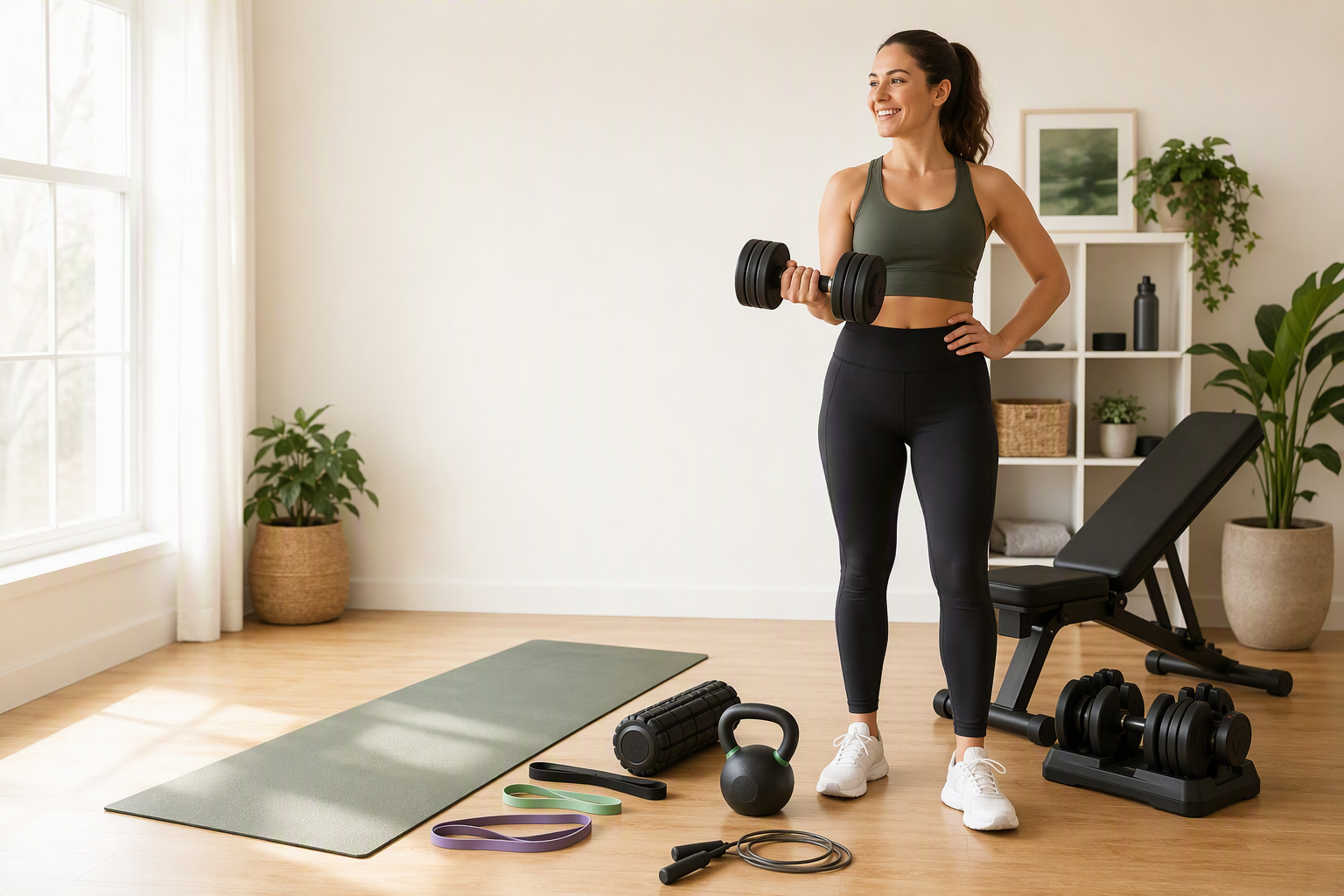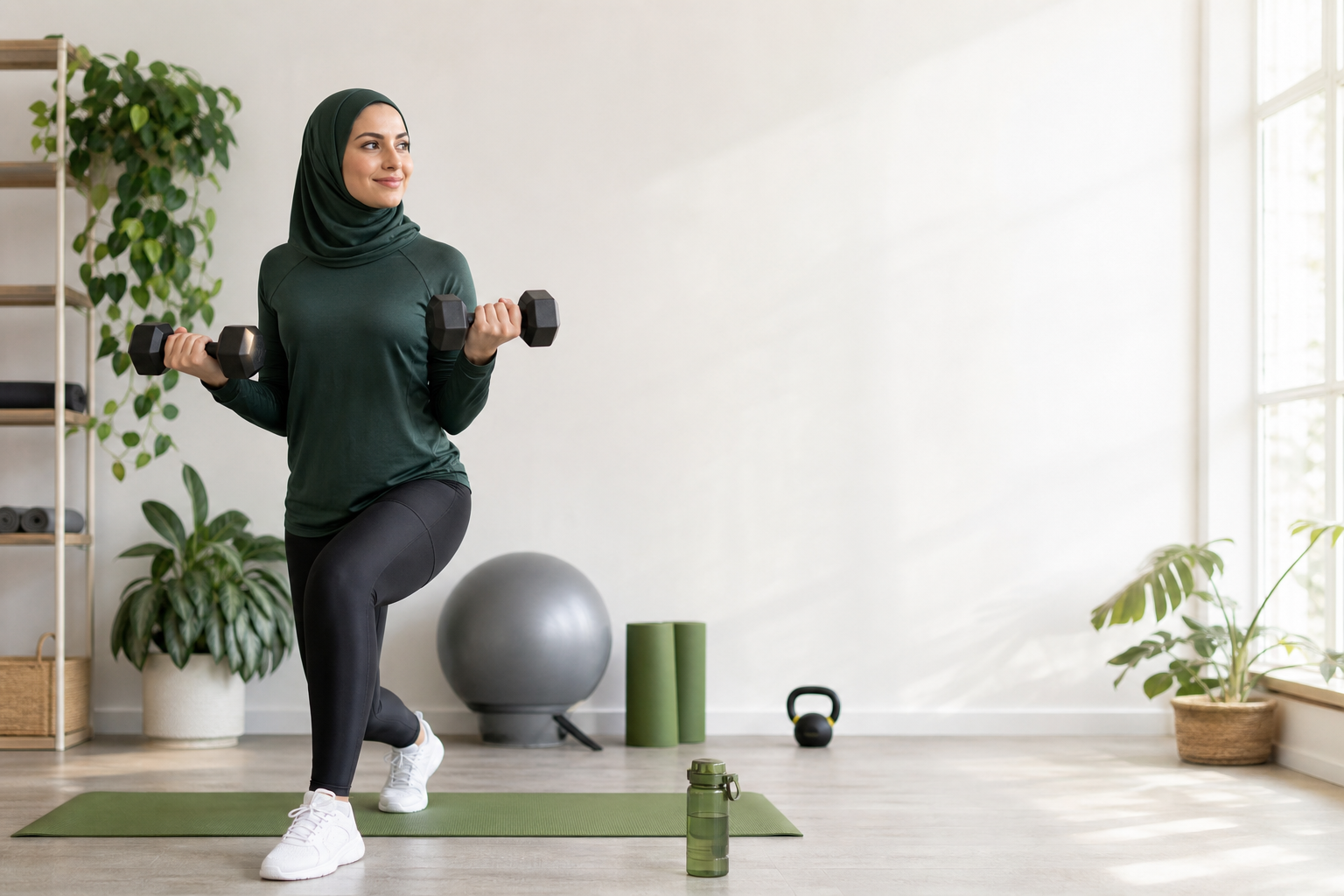
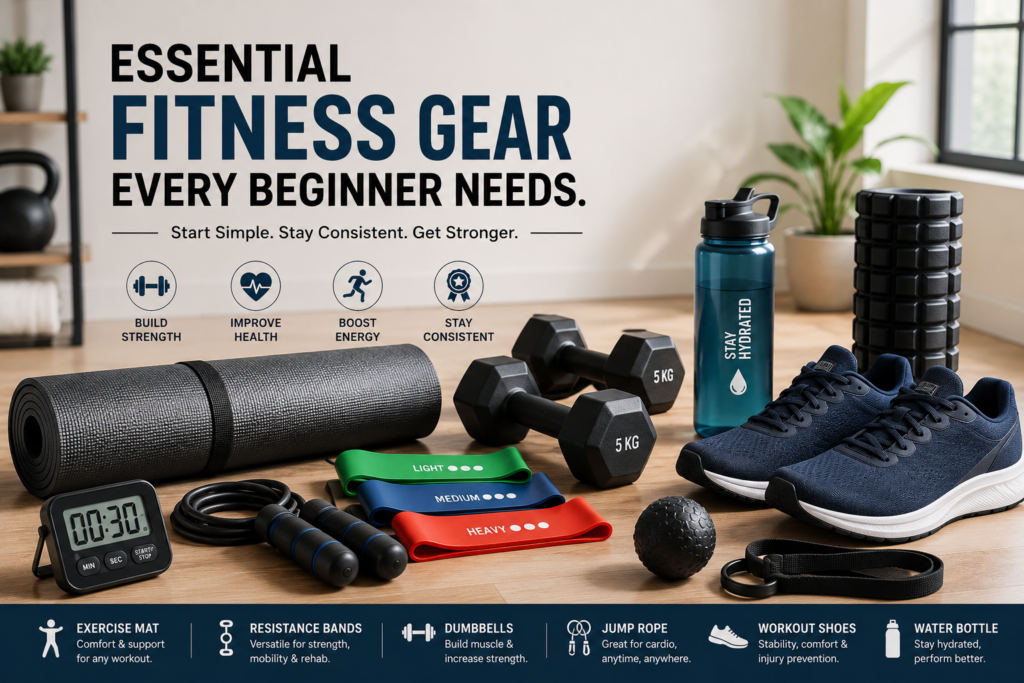
Starting a fitness journey does not mean you need an expensive gym membership or a room full of equipment. With a few essential fitness gear for beginners, you can create a simple and effective workout setup at home, outdoors, or wherever you feel comfortable exercising.
The right equipment can make workouts more convenient, support proper movement, and help you stay consistent. However, equipment is only one part of fitness. Regular exercise, good nutrition, adequate sleep, and consistency are equally important.
What Fitness Gear Does a Beginner Really Need?
Beginners often see many different fitness products and assume they need all of them. In reality, a small collection of versatile equipment can be enough to start.
Some of the most useful options include:
- Exercise mat
- Resistance bands
- Dumbbells
- Jump rope
- Foam roller
- Water bottle
- Workout timer
- Comfortable workout shoes
The best equipment depends on your goals, available space, and budget.
Essential Fitness Gear for Beginners
1. Exercise Mat
An exercise mat is one of the simplest pieces of equipment for a beginner.
It provides a comfortable surface for exercises such as push-ups, planks, sit-ups, stretching, yoga, and mobility movements.
Choose a mat that provides enough cushioning and grip for the exercises you plan to perform. A lightweight mat is also easier to store and carry.
2. Resistance Bands
Resistance bands are versatile and affordable. They can be used for strength training, warm-ups, mobility exercises, and activation movements.
Different resistance levels allow beginners to gradually increase the challenge as they become stronger.
Because bands take up very little space, they are especially useful for home workouts and travel.
3. Dumbbells
A pair of dumbbells can significantly expand the number of exercises you can perform.
Beginners can use dumbbells for exercises such as:
- Bicep curls
- Shoulder presses
- Squats
- Lunges
- Rows
- Chest presses
Start with a manageable weight that allows you to maintain good technique. Increasing weight too quickly can make it harder to control your movements.
4. Jump Rope
A jump rope is a simple tool for cardiovascular exercise.
It can help you add short bursts of movement to your workout and can be used indoors or outdoors when enough space is available.
Beginners should start slowly and focus on rhythm and technique rather than trying to jump for long periods immediately.
5. Foam Roller
A foam roller can be useful for mobility and post-workout recovery.
Many people use foam rollers on areas such as the legs, hips, and upper back to help reduce feelings of tightness.
Choose a comfortable roller and use controlled movements. Avoid applying aggressive pressure to painful or injured areas.
6. Workout Shoes
Good workout shoes are an important part of your fitness setup.
The best shoe depends on the activity. Running, weight training, walking, and court sports can require different types of support.
Look for shoes that fit comfortably and are appropriate for your main activity.
Comfort and stability are generally more important than appearance.
7. Water Bottle
Staying hydrated is an important part of exercise.
A reusable water bottle makes it easier to keep water available during workouts, especially when exercising outdoors or for longer periods.
Choose a bottle that is easy to carry, clean, and large enough for your typical workout needs.
8. Workout Timer
A simple timer can help beginners organize their workouts.
You can use it for interval training, rest periods, circuits, stretching sessions, or timed exercises.
You do not necessarily need a specialized device. A phone or basic digital timer can often perform the same function.
9. Fitness Tracker
A fitness tracker can help you monitor certain aspects of your activity, such as steps, workout duration, heart rate, or other metrics depending on the device.
However, a tracker is not essential for starting fitness.
If you enjoy tracking progress and find the information motivating, it can be a useful addition.
How to Choose the Right Fitness Gear
Before buying equipment, think about what you actually plan to do.
Consider these factors:
Your Fitness Goal
Someone who wants to build strength may prioritize dumbbells and resistance bands, while someone focused on running may need appropriate running shoes.
Available Space
If you live in a small space, choose compact equipment such as resistance bands, a jump rope, and adjustable dumbbells.
Your Budget
You do not need to purchase everything at once. Start with the basics and gradually add equipment when you have a clear reason to use it.
Ease of Use
Equipment should be simple enough that you feel comfortable using it correctly.
Quality
Look for durable products made from reliable materials. Cheap equipment is not always a bad choice, but poor construction can make some products less useful or less durable.
A Simple Beginner Fitness Setup
If you are starting with a limited budget, you can build a practical setup with just a few items:
Basic setup:
- Exercise mat
- Resistance bands
- One pair of dumbbells
- Water bottle
- Comfortable workout shoes
This setup can support a wide variety of home workouts without requiring a large amount of space.
As your fitness level improves, you can consider adding equipment such as a jump rope, foam roller, adjustable weights, or a fitness tracker.
Common Mistakes Beginners Should Avoid
Buying Too Much Equipment
Having more equipment does not automatically produce better results. Start with the tools you actually need.
Choosing Equipment Based Only on Price
The cheapest product may not always provide good durability or comfort. Look for a balance between price, quality, and usefulness.
Ignoring Technique
Learning how to perform exercises correctly is more important than simply having expensive equipment.
Increasing Intensity Too Quickly
Progress gradually. Give your body time to adapt to new exercises and increased training demands.
Forgetting Recovery
Rest, sleep, hydration, and nutrition are important parts of a fitness routine. Training harder every day is not necessarily better.
How to Build Your Fitness Gear Collection Over Time
You do not need to buy everything on your first day.
Start with basic equipment and use it consistently. Once you understand your fitness goals, you can identify which additional tools would actually improve your workouts.
For example, you might start with resistance bands and an exercise mat. Later, you could add dumbbells, a jump rope, or recovery equipment.
This approach can save money and prevent your home from becoming filled with equipment you rarely use.
Final Thoughts
The best fitness gear for beginners is equipment that is simple, useful, comfortable, and appropriate for your goals.
You can start with a few basic items such as an exercise mat, resistance bands, dumbbells, comfortable shoes, and a water bottle. These tools can support many different workouts without requiring a large investment.
Remember that equipment is not what creates fitness progress. Consistent training, proper technique, recovery, nutrition, and patience are what matter most.
Start simple, stay consistent, and add new equipment only when it genuinely supports your fitness journey.